Nursing Programs: A Comprehensive Guide to BSN, RN, and Accelerated Pathways for Career Changers
Nursing remains one of the most accessible and rewarding healthcare careers, with multiple program types designed to fit different schedules, budgets, and professional backgrounds. This guide breaks down every major pathway.
Understanding Nursing Program Types and Pathways
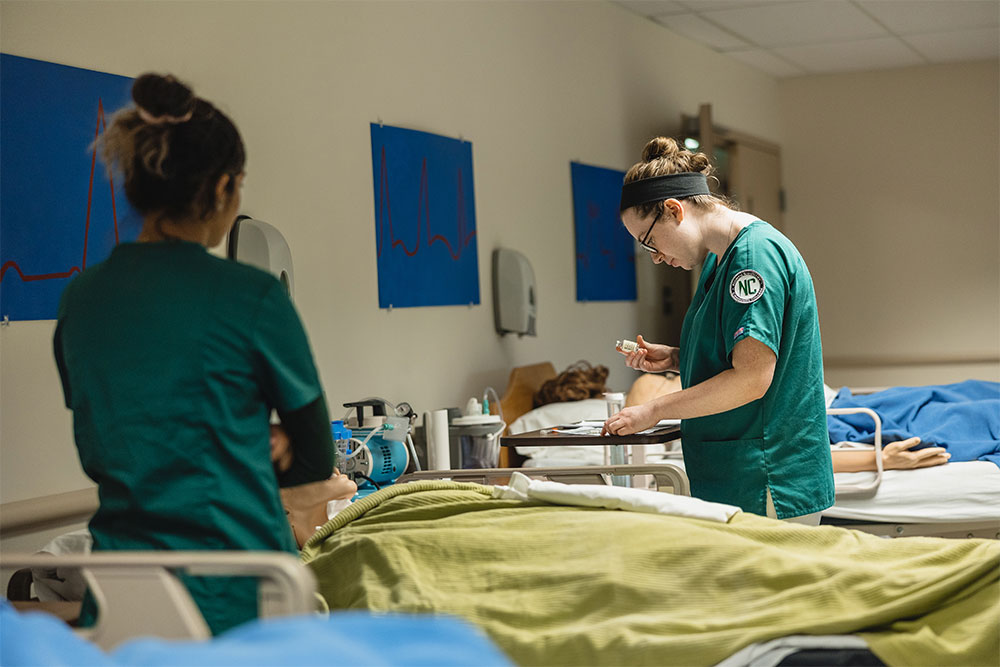
The nursing education landscape offers a range of credential levels, each opening different career doors. Prospective students often feel overwhelmed when comparing RN programs, BSN programs, and LPN or LVN certificates because admission requirements, clinical hours, and career outcomes vary considerably across each track. A clear understanding of these pathways is essential before committing time and tuition dollars.
Registered Nurse programs typically come in two forms: the Associate Degree in Nursing, which generally takes two years at a community college, and the Bachelor of Science in Nursing, a four-year university degree that has become the preferred credential at many hospitals. Licensed Practical Nurse and Licensed Vocational Nurse certificates represent shorter-duration options, usually completed within twelve to eighteen months, that qualify graduates for entry-level bedside care roles under RN supervision.
For those exploring nursing programs near me through local searches, geography matters. Clinical placement availability, state licensure reciprocity through the Nurse Licensure Compact, and regional employer demand all influence which program format delivers value in a given area. Evaluating proximity to clinical sites can significantly reduce commute-related stress during the most intensive semesters.
Core Differences Between BSN, RN, LPN, and Accelerated Nursing Programs
Choosing the right credential depends on long-term career goals, available time, and financial resources. The following comparison highlights how each program type stacks up across key dimensions that prospective nursing students should evaluate carefully.
・BSN programs typically require four years of full-time study and open pathways to leadership, education, and advanced practice roles
・Associate-level RN programs can be completed in roughly two years and offer a quicker entry point into registered nursing positions
・LPN and LVN certificates involve twelve to eighteen months of training and prepare graduates for supervised clinical care under an RN
・Accelerated nursing programs compress a BSN curriculum into eleven to eighteen months for students who already hold a non-nursing bachelor degree
・Online nursing programs provide flexible scheduling for didactic coursework, though clinical rotations still require in-person attendance
How Accelerated Programs Serve Career Changers
Accelerated nursing programs have gained significant traction among adults making a career change into healthcare. These programs assume that enrollees already possess a bachelor degree in another field, so foundational general education courses are waived. The result is an intensive, fast-track BSN curriculum that compresses four years of nursing education into roughly twelve to eighteen months of continuous study. Nursing programs for career changers often include bridge coursework in anatomy, physiology, and microbiology as prerequisites, which can sometimes be completed online before the cohort start date. Part-time nursing programs offer another route for working adults, spreading coursework across additional semesters so that students can maintain employment during the transition.
Practical Steps to Research and Apply for Nursing Programs
Navigating the application process requires a methodical approach. Admission criteria differ across institutions, and understanding the sequence of steps helps applicants avoid common mistakes that delay enrollment.
The first step involves confirming prerequisite requirements. Nearly all nursing programs require completed coursework in human anatomy, physiology, microbiology, and college-level math or statistics. Some accelerated programs accept prerequisite courses taken within the previous five to seven years, while others require more recent completion. Prospective students should request a prerequisite evaluation from each target school early in the process.
Entrance exams represent another gatekeeper. Many BSN and RN programs require the TEAS exam, while certain institutions accept the HESI A2 instead. Studying for these standardized tests and achieving a competitive score can significantly strengthen an application, especially at programs with limited seats and high applicant volume.
Clinical placement logistics deserve attention as well. Programs located in metropolitan areas may have established relationships with large hospital networks, offering diverse clinical rotations in specialties such as pediatrics, critical care, and community health nursing. Students pursuing nursing programs for adults should verify that clinical schedules accommodate working professionals, as some rotations involve early morning or weekend shifts.
・Request prerequisite evaluations from each target institution at least six months before the application deadline
・Register for and complete the TEAS or HESI A2 entrance exam with adequate preparation time
・Gather professional references, transcripts, and a personal statement emphasizing motivation for nursing
・Confirm that clinical placement schedules align with current work or family obligations
・Verify program accreditation through the Commission on Collegiate Nursing Education or the Accreditation Commission for Education in Nursing
Certification and Licensure After Graduation
Completing a nursing program is only part of the journey. Graduates must pass the NCLEX-RN or NCLEX-PN licensure examination administered by the National Council of State Boards of Nursing. Pass rates vary by institution, and reviewing a program's historical NCLEX pass rate provides a meaningful quality indicator. Many states also require background checks and continuing education credits for license renewal. Additional certification in specialties such as critical care, oncology, or pediatric nursing can be pursued after gaining clinical experience, further expanding career opportunities and earning potential.
Nursing Program Costs and Affordable Tuition Options
Tuition represents a significant factor when comparing nursing programs, and costs fluctuate widely based on institution type, geographic region, and program format. Understanding the full financial picture, including fees, textbooks, clinical supplies, and certification exam costs, helps students create a realistic budget.
Community college ADN programs typically carry lower per-credit tuition rates compared to four-year universities, making them an attractive starting point for budget-conscious students. Public university BSN programs offer moderate tuition for in-state residents, while private institutions tend to charge considerably higher rates. Accelerated BSN programs, despite their shorter duration, often carry a premium per-credit cost due to the intensive faculty and clinical resources required.
・Federal financial aid through FAFSA covers tuition at accredited nursing programs regardless of format
・Nursing-specific scholarships from professional organizations can offset a meaningful portion of costs
・Employer tuition reimbursement programs at hospitals and healthcare systems frequently support nursing students
・State workforce development grants target high-demand fields including nursing in many regions
・Loan forgiveness programs such as the Nurse Corps Loan Repayment Program reduce post-graduation debt for graduates who serve in shortage areas
Making a Meaningful Tuition Comparison
When evaluating nursing program cost across institutions, looking beyond headline tuition figures is essential. A nursing tuition comparison should factor in the total cost of attendance, which includes clinical supply kits, liability insurance, background check fees, drug screening costs, and NCLEX exam registration. Some programs bundle these into tuition while others list them separately, creating misleading headline numbers. Affordable nursing programs are not always the ones with the lowest sticker price; graduation rates, NCLEX pass rates, and employment outcomes within six months of completion are equally important indicators of overall value. Students should request a complete cost-of-attendance breakdown from financial aid offices and compare net costs after scholarships and aid rather than relying on published tuition rates alone.
FAQ
What are the prerequisites for most nursing programs?
Common prerequisites include courses in human anatomy, physiology, microbiology, college-level mathematics or statistics, and English composition. Some programs also require introductory psychology or nutrition. Prerequisite validity periods vary, so prospective students should confirm that completed coursework falls within each institution's accepted timeframe.
Can working adults realistically complete a nursing program while employed?
Part-time nursing programs and online RN-to-BSN options are specifically designed for working adults. These formats spread coursework over additional semesters, and online platforms allow students to complete didactic portions on a flexible schedule. Clinical rotations still require in-person attendance, so students should verify that rotation schedules accommodate work commitments.
How do accelerated nursing programs differ from traditional BSN programs?
Accelerated BSN programs condense the nursing curriculum into eleven to eighteen months of full-time, intensive study. They are designed for students who already hold a bachelor degree in a non-nursing field. The coursework and clinical requirements mirror those of a traditional BSN, but the pace is considerably faster, requiring a full-time commitment with limited opportunity for outside employment.
What should students look for when comparing nursing program costs?
A thorough nursing tuition comparison considers total cost of attendance, not just published tuition rates. Students should account for clinical supply kits, liability insurance, background checks, NCLEX exam fees, textbooks, and any technology or lab fees. Comparing net cost after financial aid, scholarships, and employer reimbursement provides a more accurate picture of affordability across different program types and institutions.
Summary
Nursing education offers multiple credentialing pathways, from LPN and LVN certificates to associate and bachelor degree programs, each suited to different timelines and career objectives. Accelerated BSN programs and part-time formats have expanded access for career changers and working adults seeking to enter healthcare without pausing their professional lives entirely. Online nursing programs further increase flexibility for didactic learning, though hands-on clinical requirements remain a universal component.
Financial planning plays a central role in selecting the right program. Tuition varies dramatically across institution types, and a comprehensive cost comparison that includes ancillary fees, financial aid, and post-graduation outcomes leads to more informed decisions. Accreditation status, NCLEX pass rates, and clinical placement quality serve as reliable indicators of program value beyond price alone.